
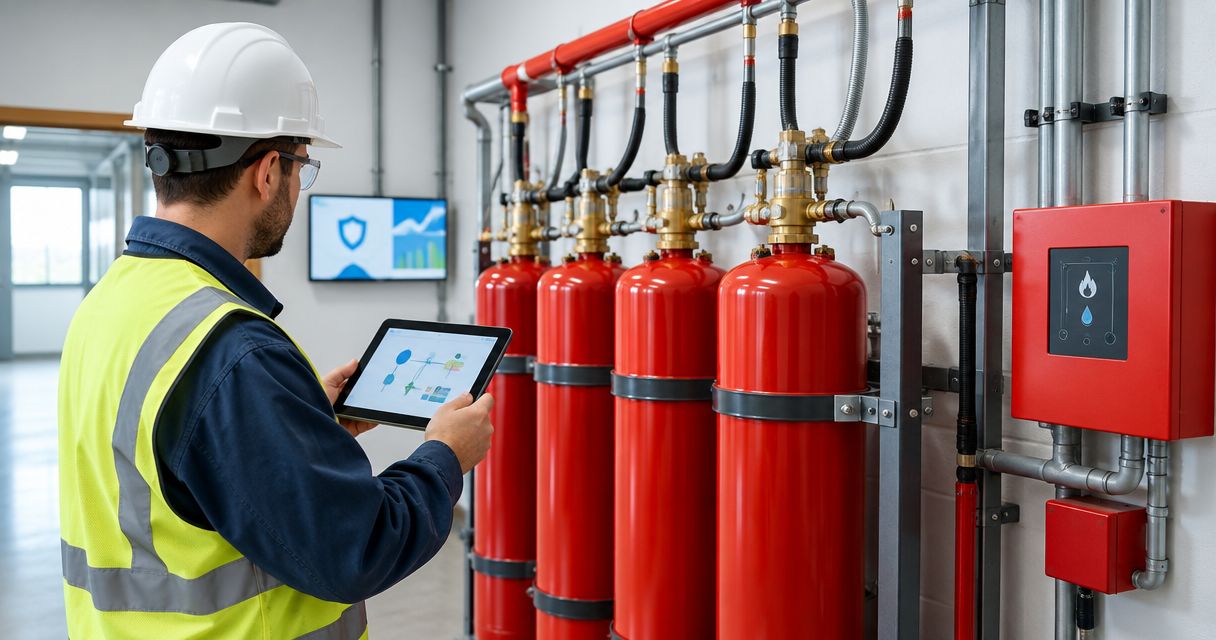
Fire suppression system installation timeline by type comes down to four gates: permit, hardware lead time, the install itself, and acceptance testing. In 2026 the install is rarely the slow part. The permit and the sign-off are.
- Vehicle systems install fastest; clean agent room systems and marine systems take longest, because of enclosure work and inspection gates.
- The fire suppression system installation timeline by type is set by permit, parts, install, and acceptance test, in that order.
- Kitchen wet chemical installs move quickly once the permit clears; the health department sign-off is the usual wait.
- No honest single number covers every site. Get a dated schedule per gate before you sign.
Why this matters
A suppression system you ordered but cannot turn on is a gap in coverage. A kitchen cannot cook without its hood system. A fleet truck cannot run a route with a pulled system. A server room cannot hold a clean agent cylinder in a hallway.
The timeline decides how long you run exposed, or how long you stay closed. Plan it by gate, not by a single install date.
The short answer
There is no single average install time across system types, and any page that gives you one number is guessing. What holds across every type in 2026 is the order of gates and which gate usually runs longest.
The verdict: vehicle systems finish fastest, kitchen wet chemical systems come next, and clean agent room systems and marine systems take the longest. Permit and acceptance testing, not the install itself, decide most delays.
Times below are ranked relative to each other. They are not hour counts, because the inputs for this page do not include measured field data.
Installation timeline benchmark by system type
| System type | Relative install length | Main driver of the schedule | Governing standard | Best for |
|---|---|---|---|---|
| Vehicle fire suppression | Shortest | Vehicle downtime and bracket and nozzle routing | Manufacturer listing and fleet rules | Fleet trucks, buses, equipment |
| Kitchen hood wet chemical | Short to moderate | Hood and appliance layout, gas shutoff tie-in, permit | NFPA 17A and NFPA 96 | Restaurants, food trucks, senior care kitchens |
| Paint booth and industrial dry chemical or special hazard | Moderate | Hazard survey, ventilation interlocks | NFPA 17 and the system listing | Paint booths, process lines |
| Clean agent room system | Longest on land | Room sealing, discharge testing, panel integration | NFPA 2001 | Server rooms, data centers, archives |
| Marine vessel system | Longest overall | Vessel availability, inspection access, class and Coast Guard review | Coast Guard and class rules | Towboats, barges, vessels |
| Sprinkler or water-based | Moderate to longest | Piping, water supply, hydraulic review | NFPA 13 and NFPA 25 | Warehouses, large buildings |
What the table says: vehicle systems lead on speed. Marine and clean agent room systems trail, and for different reasons. One is access to the vessel; the other is enclosure integrity.
Limits of this data: the ranking is relative, drawn from how each install is structured. It does not reflect measured field durations for any specific contractor, region or building, so treat it as a planning order, not a quote.
The four gates every install passes through
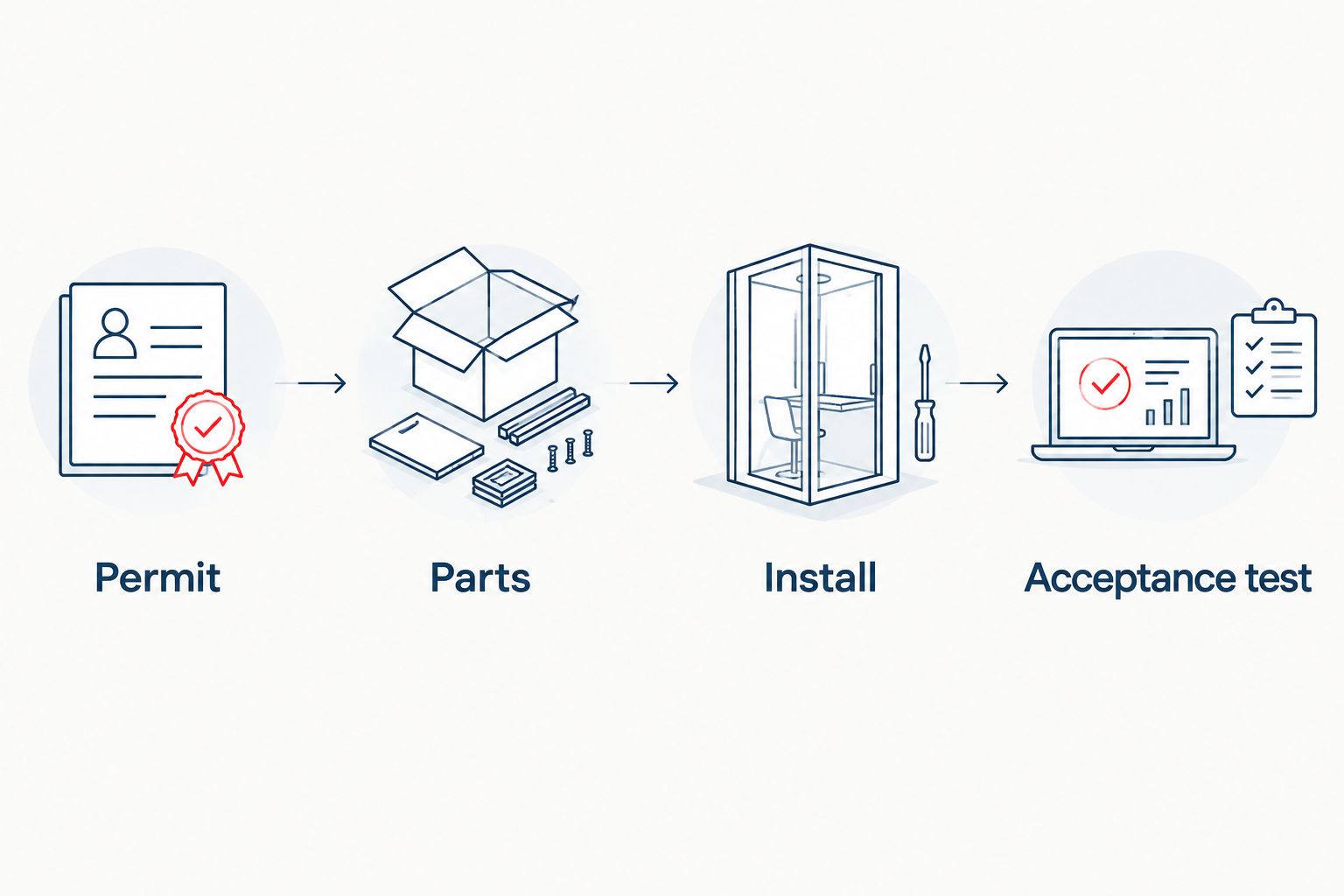
Gate 1: Permit and plan review
Most jurisdictions want a plan before work starts. The authority having jurisdiction, usually the fire marshal, sets the review pace. It is the least controllable gate. How long a fire suppression system takes to get permitted is the first thing to settle, because nothing else starts until it clears.
Gate 2: Parts and cylinders
Standard kitchen and vehicle kits are common stock items. Custom clean agent room layouts and marine installations are engineered per site, so parts wait longer. Ask for a written parts date, not a verbal one.
Gate 3: The install
This is the part everyone asks about. It is usually the shortest gate, but it is also the one that needs your site: a closed kitchen, a parked truck, a sealed room, a docked vessel. Scheduling access beats crew speed.
Gate 4: Acceptance test and sign-off
An installed system is not a finished system until it is tested and tagged. Kitchen jobs often add a health department sign-off. Clean agent systems add enclosure and panel checks. Marine jobs add inspection by the reviewing body. Skip planning this gate and a finished install sits idle.
Timeline by system type
Vehicle fire suppression
This is the fastest type to install, because the work is bounded by one vehicle. The real timeline is how long the vehicle is off the road. Fleets that stagger vehicles through the shop lose less route time than fleets that pull everything at once. For how this plays out in practice, see how long vehicle fire suppression system installation takes.
Verdict: Buy for fleets that can rotate vehicles. Wait if you cannot spare vehicles for a shop day.
Kitchen hood wet chemical
Wet chemical systems under NFPA 17A and NFPA 96 fit onto the existing hood. The install is bounded. The variable is appliance layout, because every appliance needs nozzle coverage, and the gas or electric shutoff must tie in. If you change cooking equipment mid-job, the schedule resets. The full sequence is in how long a commercial kitchen suppression system install takes.
Verdict: Buy. It is the most predictable system on land once the permit clears.
Clean agent room systems
Clean agent systems protect enclosed rooms under NFPA 2001. The room must hold the agent, so sealing gaps, doors and penetrations is part of the job. That work, plus discharge and panel testing, stretches the schedule past what the cylinders alone suggest. If you are still choosing, wet chemical versus clean agent is a decision to make before you ask for dates.
Verdict: Hold your go-live date until the enclosure is verified. Do not promise the room live on install day.
Marine vessel systems
Marine work follows the vessel, not the contractor. A towboat in service is not available for work. Inspection by the reviewing body adds a gate that land systems do not have. The sequence is covered in how long it takes to install a marine fire suppression system.
Verdict: Wait for a scheduled layup or dock period. Do not try to squeeze it between runs.
Where the delays hide
- Permit queue. Sets the start date and cannot be rushed by the contractor.
- Late appliance or equipment changes. In kitchens, a new fryer after layout resets nozzle coverage.
- Site access. A vehicle, vessel or room that is not free on the day costs more time than the work does.
- Untested enclosures. A clean agent room that fails an enclosure check goes back through repair and retest.
- Sign-off paperwork. Missing tags or records hold up final approval after the work is done.
The pattern: the install is the shortest gate in most jobs, and the paperwork around it is the longest.
How to use these benchmarks
- Ask for the schedule by gate. Permit date, parts date, install date, test date. A single completion date hides which gate is at risk.
- Fix your equipment before layout. Lock the appliance list, vehicle list or room plan first. Changes after design restart the schedule.
- Book access early. Reserve the kitchen, vehicle, room or vessel window the day the permit is filed, not the day it clears.
- Plan the sign-off. Confirm who inspects, what records they want, and when they can come. Then your 2026 go-live date is real.
First-Line Fire handles suppression systems alongside extinguisher service, alarms and training, so one contractor can line the gates up across sites.
Get a dated install schedule
Tell us the system type and site. We give you the gates in order.
FAQ
What is the fastest fire suppression system to install?
Vehicle fire suppression systems are the fastest type to install, because the work is limited to one vehicle. The real cost is vehicle downtime, so rotate vehicles through the shop.
Which fire suppression system takes the longest to install?
Marine vessel systems and clean agent room systems take the longest. Marine work depends on vessel availability and inspection. Clean agent work depends on sealing and testing the room.
What slows down a fire suppression installation the most?
The permit and the acceptance test slow most jobs, not the install itself. Plan review is set by the local authority and the contractor cannot speed it up.
Does a kitchen suppression system need a permit before install?
Most jurisdictions require a permit and plan review before a kitchen suppression install. Check with your local fire marshal, because requirements vary by jurisdiction.
Can I keep operating during a suppression system installation?
It depends on the type. Vehicle and marine systems take the asset out of service. Kitchen installs usually need the cooking line closed during the work. Ask for access windows in writing.
What standard governs a clean agent system install?
NFPA 2001 governs clean agent fire extinguishing systems. It covers design, installation and testing, including enclosure integrity for protected rooms.
Which standards govern kitchen hood suppression?
NFPA 17A covers wet chemical extinguishing systems, and NFPA 96 covers commercial kitchen ventilation and fire protection. Both apply to a hood system install.
How do I get an accurate installation timeline in 2026?
Ask the contractor for dates by gate: permit, parts, install and acceptance test. A single completion date does not show which step carries the risk.
One last thing
Most schedule slips come from a change after design, not from the crew. Freeze the equipment list, vehicle list or room plan before the permit goes in, and your 2026 timeline holds.


