
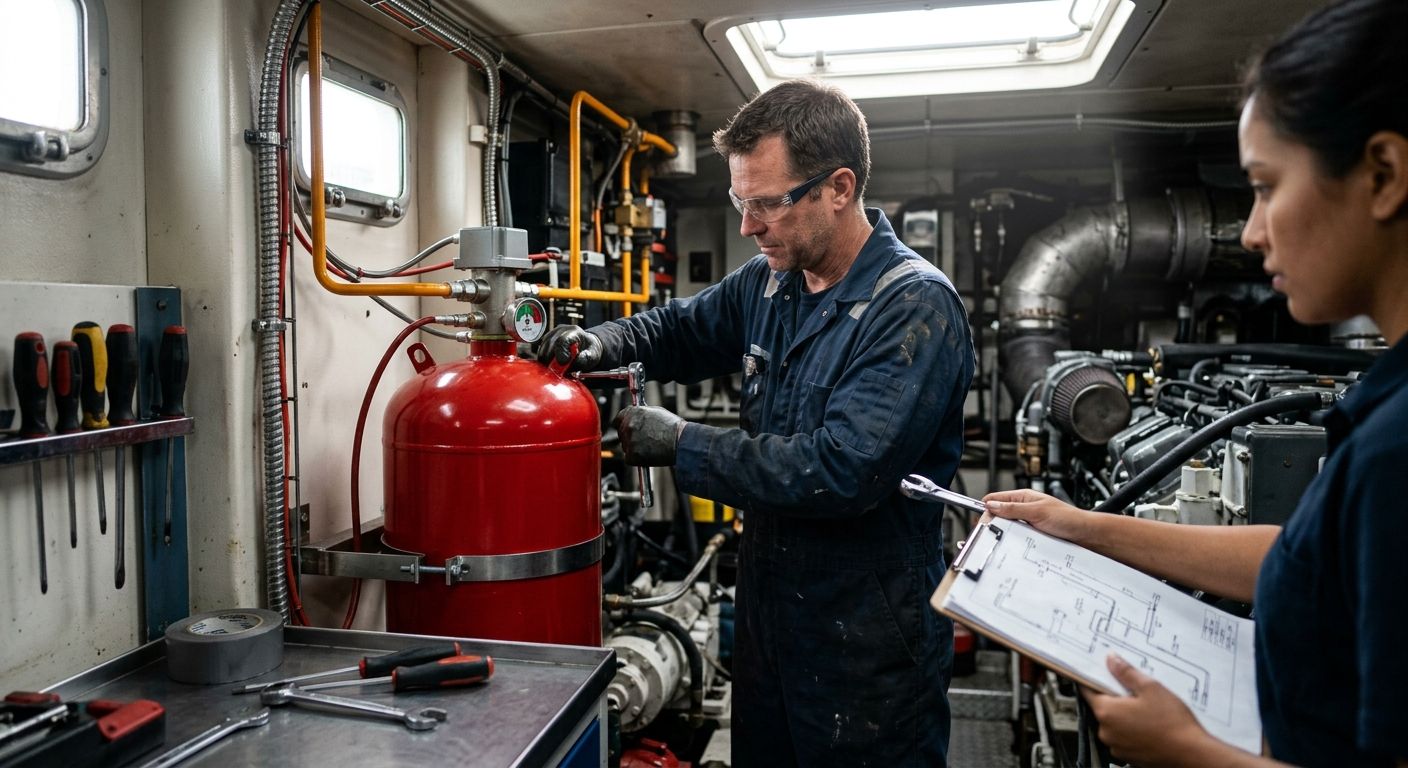
Marine fire suppression installation timelines swing wider than almost any other job on a vessel, and the haul-out schedule usually controls the calendar more than the system itself does.
- Marine fire suppression installation time is driven by dry-dock scheduling and access, not by labor hours alone.
- A small workboat retrofit can close out in a single day; a full engine-room clean agent system can run several weeks.
- CO2 total flood systems take the longest because of piping runs through tight compartments.
- Coast Guard witness testing and inspection sign-off, not the physical install, is the step owners most often underestimate.
- First-Line Fire schedules marine suppression installs around a vessel's existing haul-out window to limit lost days.
Why this matters
Every day a vessel sits in dry dock waiting on a fire suppression crew is a day it isn't earning. Marina slip fees, crew wages, and charter or towing revenue keep running whether the boat is working or not, so the real cost of a marine fire suppression system installation isn't just the invoice — it's the downtime around it.
Owners who plan the install around an existing haul-out for hull work or engine service save the most time. Bolting suppression work onto a scheduled yard period, rather than booking a separate one, is the single biggest lever on total project length. Marine vessel fire suppression systems differ enough in complexity that this planning step matters before you even pick a system type.
How long does it take to install a marine fire suppression system?
The honest answer: it depends on what's being protected and how the vessel is accessed, but the work breaks into the same phases regardless of vessel size.
| Phase | What happens | Typical duration pattern |
|---|---|---|
| Design and engineering | Compartment survey, hazard classification, agent selection | Days to weeks before the vessel touches the yard |
| Procurement | Cylinders, piping, nozzles, detection wiring ordered | Runs in parallel with engineering; lead time varies by manufacturer |
| Haul-out or pier-side access | Vessel positioned for crew access to engine room or hazard areas | Tied to the yard's own schedule, not the fire crew's |
| Physical install and wiring | Piping run, cylinders mounted, detection and release wiring pulled | Hands-on labor, the shortest phase relative to the rest |
| Testing and commissioning | Pressure checks, detection response, manual and automatic release test | Cannot be skipped or shortened without redoing it |
| Inspection sign-off | Coast Guard or class society witness, documentation filed | Often the longest wait if a witness has to be scheduled |
The pattern holds across vessel types: design and sign-off eat the calendar, physical install eats the labor hours. A crew can mount cylinders and run piping in a compartment in a matter of days once they have access — getting that access and getting the paperwork closed are what stretch the project.
CO2 total flood systems: the longest install due to piping runs
CO2 systems protect an entire compartment by flooding it with agent, which means piping has to reach every corner of the space being protected. On a vessel with a tight engine room, that piping run is the slowest part of the physical install, and it has to be pressure-tested before anyone signs off on it.
Best for: engine rooms and enclosed compartments with no crew present during a discharge. Skip if the space is regularly occupied — CO2 displaces oxygen and needs strict interlocks.
Clean agent systems: faster piping, longer engineering lead time
Clean agent systems (the FM-200 and Novec family) use smaller-diameter piping than CO2 and can sometimes route through existing conduit, which shortens the physical install. The trade-off shows up earlier: agent selection and cylinder sizing take more engineering time upfront because the compartment volume calculation has to be precise.
Best for: compartments where crew may be present or where corrosive residue from other agents is a concern. Watch for: longer lead times on cylinders if the manufacturer doesn't stock the exact size your engineering calls for.
Water mist systems: retrofit-friendly, shortest disruption
Water mist systems generally use lighter piping and lower pressure hardware than gaseous agent systems, which makes them the fastest to retrofit into a vessel that's already in the water for pier-side work in many cases. They also skip the oxygen-displacement interlocks that CO2 requires.
Best for: vessels doing incremental upgrades without a full dry-dock period. Skip if the hazard class calls for total flood suppression that mist alone doesn't cover.
Why marine fire suppression installation time varies
- Vessel size and compartment count — more spaces to protect means more piping runs and more testing cycles.
- System type — CO2, clean agent, and water mist each have different piping, cylinder, and interlock requirements.
- Dry-dock vs. pier-side access — hauling a vessel adds its own scheduling constraint separate from the fire crew's timeline.
- Existing infrastructure — a vessel with prior suppression wiring or piping in place installs faster than a bare-hull retrofit.
- Coast Guard or class society witness testing — scheduling an inspector to witness the discharge test is frequently the longest single wait in the project.
- Cylinder and hardware lead time — availability from the manufacturer can push the start date regardless of how fast the crew works once parts arrive.
First-Line Fire builds the install schedule around the vessel's existing haul-out window whenever the yard allows it, which is the single biggest time-saver available to an owner. That's a scheduling call, not a product upsell — it just means fewer separate trips out of the water.
Plan your marine suppression install
Coordinate the install with your existing haul-out window and cut lost dock days.
Does a marine fire suppression system need to be installed in dry dock?
Not always — water mist and some clean agent retrofits can be done pier-side if the compartment is accessible without hull work. CO2 systems with piping runs through the hull or below the waterline usually require dry dock access.
How often does a marine fire suppression system need to be inspected after installation?
Inspection intervals depend on the regulatory body overseeing the vessel and the agent type installed, and they start the day the system passes commissioning. Fire suppression inspection intervals by regulatory body covers how those schedules differ by system and oversight agency.
Can a marine fire suppression system be installed while the vessel is in service?
A full engine-room system generally cannot — the vessel needs to be out of service for haul-out access, piping runs, and testing. Smaller retrofits or component upgrades sometimes can be scheduled around limited service windows, but that has to be confirmed compartment by compartment.
FAQ
How long does marine fire suppression installation take in 2026?
It depends on vessel size and system type: a small retrofit can close out in a single day of hands-on work, while a full engine-room CO2 or clean agent system can run several weeks once engineering, procurement, and inspection sign-off are included.
What is the fastest type of marine fire suppression system to install?
Water mist systems are generally the fastest to retrofit because they use lighter piping and skip the oxygen-displacement interlocks CO2 systems require.
Why does Coast Guard inspection add time to a marine fire suppression install?
A witness has to be scheduled to observe the discharge test before the system is signed off, and that scheduling window is often longer than the physical install itself.
Is a marine fire suppression system installed differently than a commercial building system?
Yes — vessel compartments have tighter access, hull and bulkhead penetrations to manage, and oversight from Coast Guard or class society rules instead of local fire marshal sign-off, all of which change the install sequence.
Does the size of the vessel change installation time?
Yes, a larger vessel with more protected compartments means more piping runs and more testing cycles, which extends both the physical install and the commissioning phase.
Can a marine fire suppression system be installed alongside a hydro test or inspection visit?
Suppression installation and hydrostatic testing of portable extinguishers are separate services, but scheduling them in the same yard period reduces total vessel downtime.
What causes the longest delays in a marine fire suppression installation?
Cylinder and hardware lead time from the manufacturer and Coast Guard witness scheduling are the two most common causes of delay, more often than the physical labor.
Should installation be scheduled during an existing dry-dock period?
Yes — coordinating the suppression install with a haul-out already booked for hull or engine work avoids a second trip out of the water and is the fastest way to shorten the overall project.
One last thing
The phase nobody budgets extra time for is procurement — if a cylinder size or agent isn't in stock at the manufacturer, that lead time sits on the calendar before the crew ever steps aboard. Confirm hardware availability before you lock a haul-out date, not after.


