
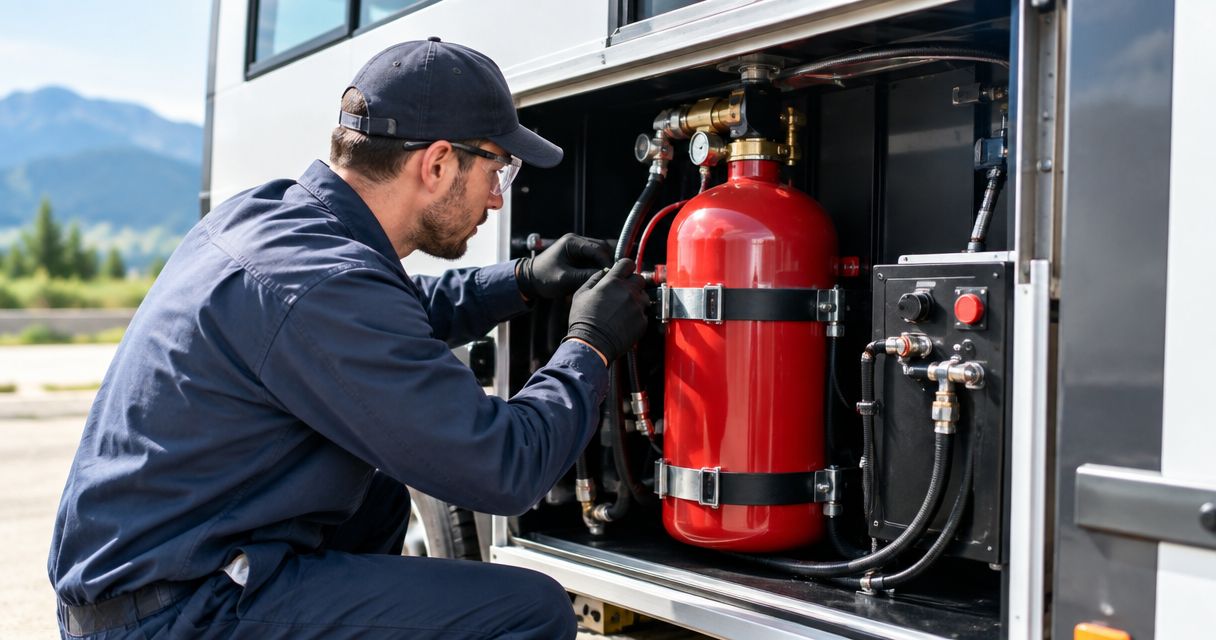
Vehicle fire suppression installation time depends on how many vehicles are getting a system, the agent type chosen, and whether the job is a single truck or a full fleet rollout — not a fixed shop schedule. A single vehicle usually clears in one shop visit; a fleet install stretches across multiple visits because each unit needs its own mount, pressure check, and tag before it goes back on the road.
- A single-vehicle fire suppression install finishes in one shop visit; fleet-wide rollouts take multiple scheduled visits.
- Dry chemical systems mount with fewer components than clean agent systems, which cuts labor time on a single unit.
- The vehicle stays out of service during mounting and the initial pressure check, not just during wiring.
- First-Line Fire Extinguisher Co. schedules fleet installs around routes across Kentucky, Illinois, Indiana, Tennessee, Missouri and Alabama in 2026.
- DOT and MSHA inspection requirements after installation run on a separate timeline most fleet managers don't budget for.
Why this matters
A fleet manager who books an install without knowing the timeline ends up with trucks parked on a lot mid-route, not mid-shift. Vehicle fire suppression installation time isn't a marketing number — it's a scheduling problem that touches dispatch, driver assignments, and whatever compliance deadline is already on the calendar for 2026.
Getting the timeline wrong costs more than shop labor. A truck sitting idle for an extra day because nobody planned for vehicle fire suppression systems for fleet trucks to require sequential installs across a fleet is a load that doesn't move.
How long does vehicle fire suppression installation take?
There's no single number that fits every vehicle. The agent type and the vehicle's engine bay layout set the baseline, and vehicle count multiplies it.
| System type | Typical vehicle application | Installation complexity |
|---|---|---|
| Dry chemical | Fleet trucks, buses, off-road equipment | Lower — fewer components, simpler mounting |
| Clean agent | Engine compartments with sensitive electronics | Higher — piping and nozzle placement add steps |
| Foam-based | Heavy equipment, mining vehicles | Moderate — depends on tank placement |
Dry chemical systems generally install faster on a single vehicle because there's less piping to route and fewer nozzles to aim. Clean agent systems take longer per unit because the nozzles have to be positioned around wiring harnesses and fuel lines without blocking access panels.
Single-vehicle installs: what happens in one shop visit
A single vehicle typically goes through mounting, wiring the detection line, pressure-testing the cylinder, and tagging the system before it leaves the shop. The vehicle is out of service for the entire visit, not just the wiring portion — the pressure check and final walk-through happen after everything is bolted down.
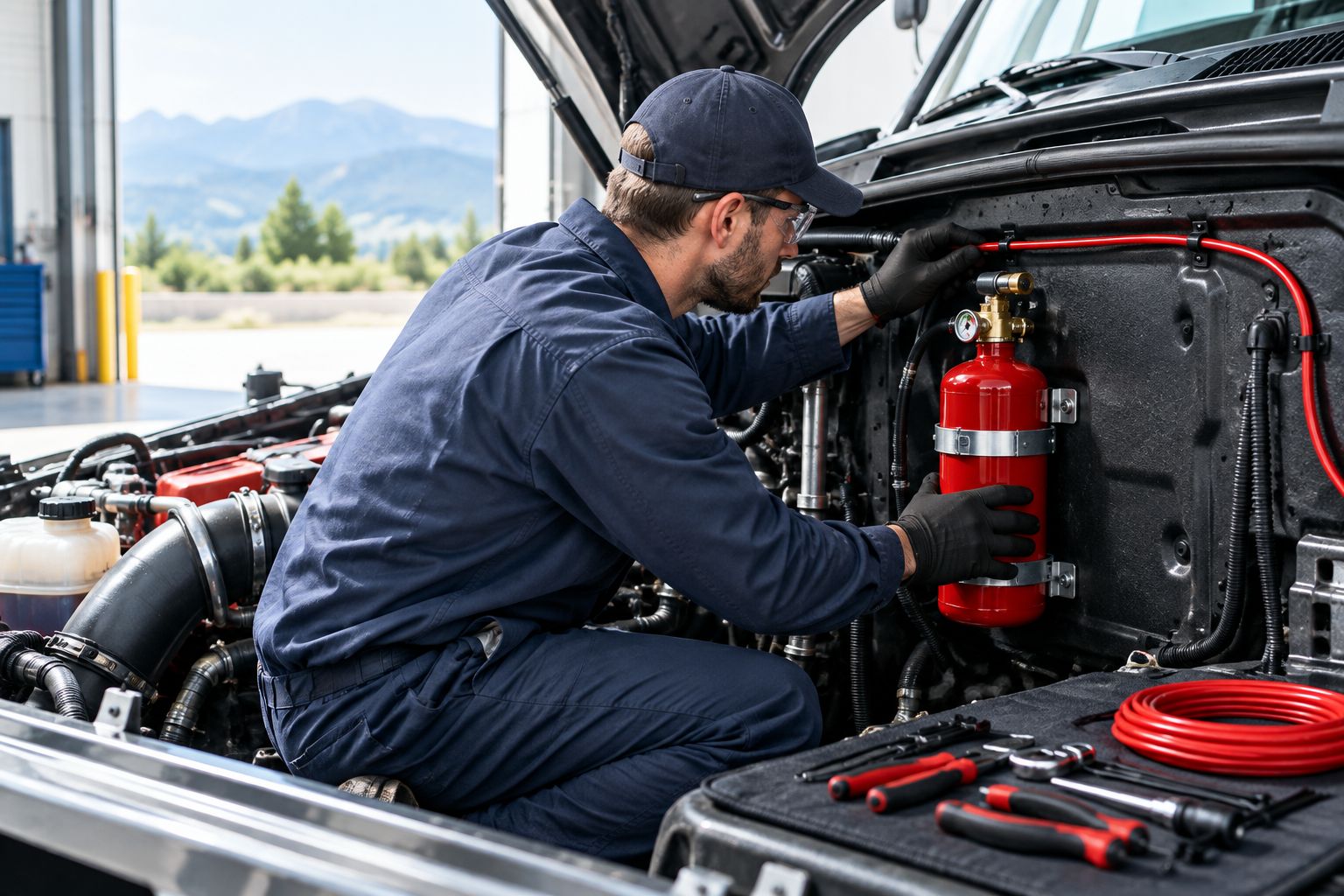
One truck with a straightforward engine bay is the fastest scenario. A vehicle with aftermarket modifications, tight clearances, or a non-standard fuel system adds steps because the technician has to route lines around obstacles that a factory layout wouldn't have.
Fleet-wide installs: why the timeline stretches across multiple visits
A fleet install isn't one long job — it's a series of single-vehicle jobs stacked back to back. Each truck needs its own mount, wiring, and pressure check, and most fleets can't pull every vehicle off the road at once without stopping deliveries.
First-Line Fire Extinguisher Co. schedules fleet-wide vehicle fire suppression installs around route cycles across Kentucky, Illinois, Indiana, Tennessee, Missouri and Alabama so a fleet keeps moving trucks while others are in the shop. That's the practical answer to vehicle fire suppression installation time for a fleet: it's however many single-vehicle visits it takes, spread across a schedule that doesn't strand the whole operation at once.
Get your fleet install scheduled
Plan installs around routes instead of parking trucks all at once.
Why vehicle fire suppression installation time varies
- Number of vehicles — one truck is one visit; a fleet is many visits stacked on a schedule.
- Agent type — dry chemical mounts faster than clean agent systems with piped nozzles.
- Engine bay layout — tight clearances or aftermarket parts add routing steps.
- Access to the vehicle — a fleet yard with staggered availability moves faster than one with every truck on the road at once.
- Post-install inspection requirements — DOT and MSHA sign-off timelines run separately from the mechanical install.
- Technician availability — a rush job on short notice competes with already-booked visits.
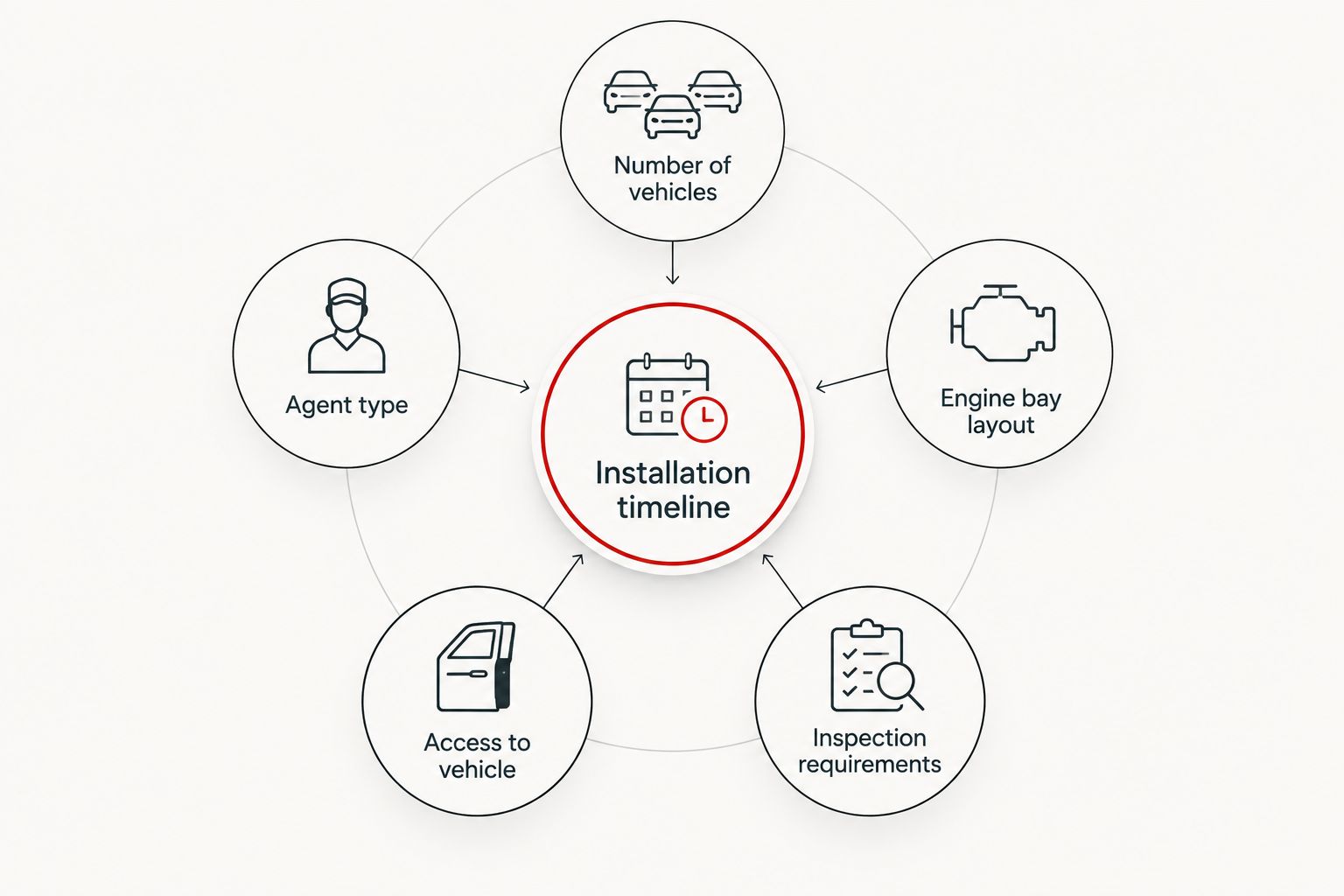
A fleet running dry chemical systems on standard engine bays across five trucks moves through a shop faster than two trucks needing clean agent systems around modified fuel lines. Vehicle count isn't the only lever — layout complexity can outweigh it.
Does the vehicle need to be taken out of service during installation?
Yes, the vehicle is out of service for the full visit, not just while wiring is run — mounting, detection line routing, and the pressure check all happen before the vehicle is cleared to leave. Plan the visit around a day the vehicle isn't scheduled for a route.
How soon after installation does a vehicle fire suppression system need inspection?
Inspection intervals run on their own schedule separate from the installation date, tied to the regulatory body governing the fleet — DOT for commercial trucking, MSHA for mining equipment. A fleet moving vehicle fire suppression compliance into a DOT compliance workflow avoids missing the first post-install check.
Can fleet installations be scheduled around delivery routes?
Yes, fleet installs are typically staggered across route cycles so trucks rotate through the shop instead of all going offline at once. This is standard practice for fleets that can't absorb a full-fleet grounding, and it's worth confirming with whoever books the ranked by agent type system before the schedule is locked in for 2026.
FAQ
How long does vehicle fire suppression installation take for one truck?
A single vehicle typically completes in one shop visit covering mounting, wiring, and a pressure check. Complex engine bays or clean agent systems with piped nozzles add time to that same visit.
How long does a fleet-wide vehicle fire suppression install take?
A fleet install is a series of single-vehicle visits scheduled across route cycles, not one continuous job. The overall timeline depends on how many trucks need systems and how many can be pulled from routes at once.
Is dry chemical faster to install than clean agent?
Yes, dry chemical systems generally mount with fewer components than clean agent systems, which cuts labor time per vehicle. Clean agent systems take longer because nozzles have to be routed around wiring and fuel lines.
Does installation happen at the fleet yard or in a shop?
Both are common depending on the provider and vehicle count — some installs happen on-site at a fleet yard, others require a shop visit. Confirm which applies before scheduling downtime.
What causes installation delays on a single vehicle?
Aftermarket modifications, tight engine bay clearances, and non-standard fuel systems are the most common causes of delay on a single vehicle. These force the technician to reroute detection lines around obstacles a factory layout wouldn't have.
Does the system need inspection right after installation?
Post-install inspection runs on a separate schedule tied to the regulatory body overseeing the fleet, such as DOT or MSHA. That first inspection date should be set at the time of install, not left open-ended.
Can a fleet stagger installs to avoid grounding every truck?
Yes, staggering installs across route cycles is standard for fleets that can't take every vehicle offline at once. Trucks rotate through the shop while others stay in service.
One last thing
The install itself isn't the part fleet managers underestimate — the post-install inspection deadline is. A truck can clear the shop and pass its pressure check, then sit non-compliant weeks later because nobody booked the required DOT or MSHA inspection alongside the install date. Set both dates at the same time in 2026, not one after the other.


