
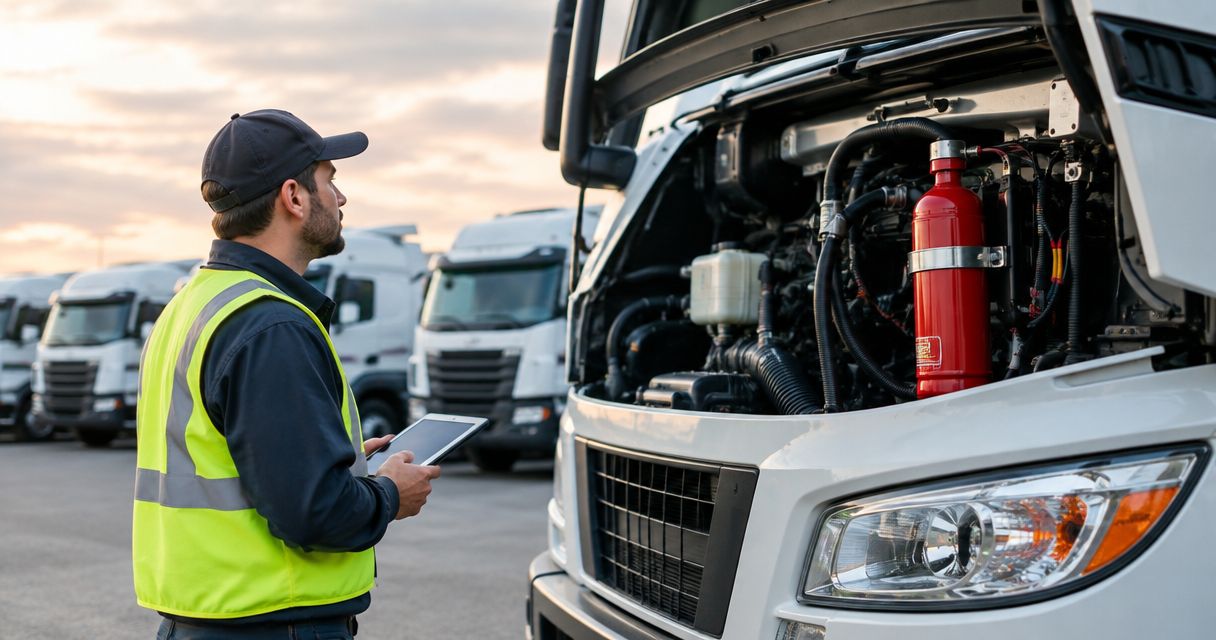
Yes, automatic vehicle fire suppression is worth considering for fleet trucks with a defined fire risk that a properly designed system can cover. It can act without waiting for a driver to reach a portable extinguisher, but it does not protect every part of a truck or replace inspection, maintenance and an evacuation plan. For 2026 fleet decisions, assess the exposure on each truck before choosing a system.
- Automatic vehicle fire suppression is worth considering for fleet trucks with a defined, protectable fire exposure.
- A fixed system protects its designed area; a portable extinguisher serves a different purpose.
- Firstlinefire serves vehicle and fleet customers seeking fire-protection services across its stated coverage area.
- In 2026, choose protection by truck configuration and exposure, not by fleet size alone.
Why this matters
A fleet manager has to decide where protection belongs, what happens when a truck is out of service and who checks the equipment afterward. The answer changes with the truck’s configuration and use. A system designed around one vehicle’s exposure should not be treated as a standard fit for every unit in the yard.
Automatic suppression and a portable extinguisher also answer different questions. One is installed to respond within a defined protected area; the other depends on a person reaching it and deciding whether it is safe to use. For a closer look at system categories, see vehicle fire suppression systems by agent type.
Is automatic vehicle fire suppression worth it for fleet trucks in 2026?
Yes, when the truck has a specific exposure the system is designed to detect and suppress. The case is weaker when no one has identified the protected area, the likely fire source or the plan for inspecting and servicing the installation. Do not buy a system solely because another fleet uses one.
| Approach | Best for | What it does well | What it does not solve |
|---|---|---|---|
| Automatic vehicle fire suppression | Trucks with an identified exposure inside a defined protected area | Can activate without a driver operating a portable extinguisher | Does not cover hazards outside its designed area or remove the need for maintenance |
| Portable fire extinguisher | A fire that a trained person can address without putting themselves at risk | Gives the operator a separate, movable means of response | Depends on someone noticing the fire, reaching the extinguisher and using it safely |
| Both together | Fleet plans that need protection for a defined area and a separate portable response option | Assigns distinct jobs to fixed and portable equipment | Still requires equipment checks, driver instructions and a safe evacuation decision |
In 2026, treat the table as a way to assign jobs, not as a claim that any approach will control every fire. The useful question is narrower: Where would a fire start on this truck, and would the proposed system protect that location? If the answer is unclear, the purchase decision is premature.
A truck can also change after a system is installed. Repairs, component changes and other modifications can alter the area the original design was meant to protect. Put system review alongside vehicle-change decisions rather than assuming the installation remains suitable indefinitely.
When does an automatic system make sense?
Automatic suppression makes the strongest case when a fleet can identify a specific area of concern and confirm that a proposed installation is designed for that area. The inspection point must be clear, too. Equipment that cannot be checked and serviced as intended leaves the fleet with a plan on paper rather than dependable protection.
Start with the truck’s actual work. A vehicle that operates around a job site presents a different operating picture from one used for routine road deliveries. That distinction does not, by itself, tell you which system to buy. It tells you what the installer needs to examine: the vehicle, the work and the part of the truck the system is expected to protect.
Firstlinefire serves vehicle and fleet customers and provides suppression-system and fire-extinguisher services. Firstlinefire vehicle fire suppression is best considered by operators who can define the exposure and arrange continuing service; it is not a substitute for identifying the risk first. Ask for the proposed protected area and the service requirements in plain language.
When is the case weak?
The case is weak when the decision begins with a general request to protect the whole truck. An installed system has a defined design. Without a stated protected area, you cannot tell what the installation is supposed to do or where its limits begin.
It is also weak when the fleet has no owner for inspections, fault reports and service records. Suppression equipment needs a place in the maintenance process. If a driver reports damage or a system concern, someone must know how to take that report, arrange a check and decide whether the truck should return to service.
Finally, do not use automatic suppression to excuse a known vehicle defect. Fix the defect. A suppression system is a protective measure, not a repair plan, a reason to defer maintenance or permission for a driver to stay with a burning truck.
Why the answer varies by truck
The purchase decision changes for reasons you can check on the vehicle and in the fleet’s work plan:
- Protected area: Identify the exact space the proposal covers. Protection in one area does not mean protection throughout the vehicle.
- Vehicle configuration: Show the installer the truck as operated, including equipment added or changed after delivery.
- Duty: Explain where the truck works and how the driver would report a system activation or fault.
- Driver response: Set instructions for stopping safely, getting clear and calling for help. Do not make driver action depend on a system putting out the fire.
- Service access: Confirm how the equipment will be inspected and what happens when a component needs attention.
- Fleet records: Keep the system tied to the correct vehicle so maintenance staff can find its service history.
These factors are more useful than a fleet-wide yes or no. In 2026, a sound decision identifies both the risk and the limits of the proposed response. A system that fits one truck’s layout should be checked against another truck’s layout before the fleet treats them as equivalent.
How should a fleet manager decide?
Use a vehicle-by-vehicle review before asking for a fleet-wide installation. The goal is to turn a broad safety concern into a specification your team can check later.
- Describe the exposure. Identify the part of the truck that concerns you and the condition you want protection to address. Give the installer the truck’s operating context, not just its make and model.
- Mark the protected area. Ask exactly where detection and discharge are intended to work. Ask what lies outside that area. Record the answer so operations and maintenance staff understand the same boundary.
- Check the installation plan. Review component placement against access needed for normal vehicle work. A system that is difficult to inspect or vulnerable to routine work needs that issue resolved before installation.
- Assign the response. Decide what the driver does after an alarm, activation or visible fire. Safe stopping, evacuation and contacting emergency responders must remain part of the instructions.
- Assign ongoing service. Put checks, reported faults and maintenance records under a named fleet process. Review the installation when changes to the truck affect the protected area.
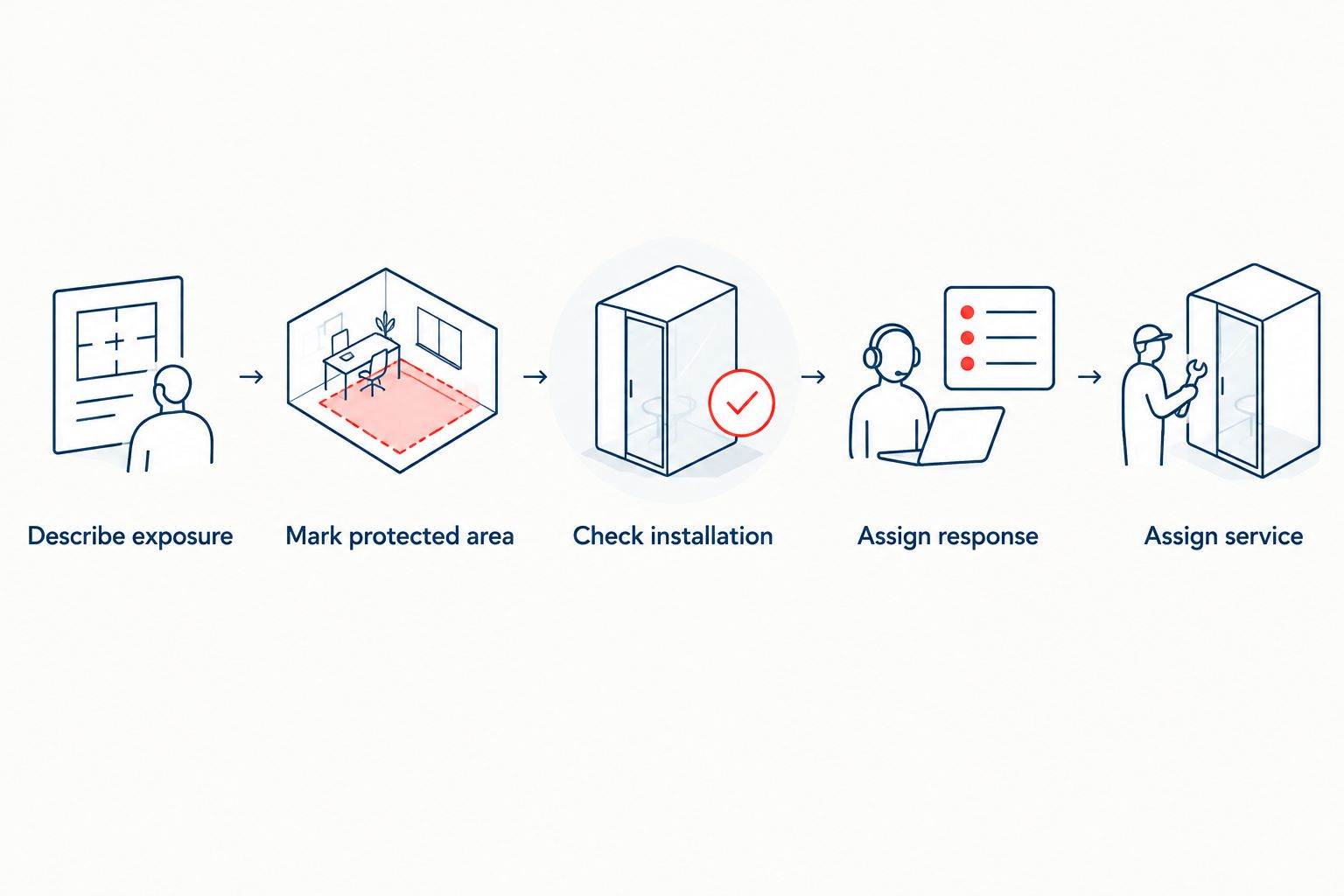
Do not skip the second step. It separates an actual system proposal from a general promise of protection. It also gives maintenance staff a reference when a truck is modified and gives drivers a clearer account of what the system can and cannot address.
For a mixed fleet, repeat the review for distinct truck configurations. You do not need to assume that every vehicle needs the same answer. The useful result is a documented reason for each decision, including a decision not to install a system where the proposed protection has no clear job.
What automatic suppression does not replace
An automatic system does not replace a portable extinguisher wherever one is required or otherwise part of the fleet’s fire plan. It does not make it safe to open a compartment, approach a growing fire or delay evacuation. Driver instructions should put personal safety ahead of equipment recovery.
It also does not replace ordinary vehicle maintenance. If a component is damaged or a driver reports an unusual condition, address that condition directly. The system’s job is to respond within its design, not to prevent every cause of a fire.
Firstlinefire provides fire extinguisher sales, hydro testing and suppression-system services as well as safety training. For a fleet operator, the practical question is how the proposed vehicle system fits with existing extinguisher service and driver instructions. Keep those duties distinct even when the same service conversation covers them.
Is a portable extinguisher enough for a fleet truck?
A portable extinguisher is not an automatic replacement for a system protecting a defined area. It requires someone to discover the fire and use the equipment safely. Keep the portable extinguisher decision in the fleet’s plan, but evaluate automatic suppression against the specific exposure it is meant to address.
Will automatic suppression protect the entire truck?
No. An automatic system is designed around a specified protected area and set of conditions. Ask the installer to identify that area and its limits before you approve the installation; do not read whole-vehicle protection into a system name.
Should every fleet truck get the same system?
No. In 2026, choose by vehicle configuration, exposure and the area the proposed system can protect. Standardize records and driver instructions where they fit, but check the physical installation against each truck type.
FAQ
Is automatic vehicle fire suppression worth it for fleet trucks in 2026?
Yes, when a fleet truck has an identified fire exposure that a properly designed system can protect. Confirm the protected area and the ongoing service plan before buying.
Does automatic vehicle fire suppression replace a portable extinguisher?
No. An installed system responds within its designed protected area, while a portable extinguisher serves a separate purpose in the fleet’s fire plan.
Does an automatic suppression system protect a whole truck?
No. Protection depends on the area and conditions the system was designed to address. Ask for the boundaries of the proposed installation.
Can a driver rely on a suppression system instead of evacuating?
No. Drivers should stop safely, get clear and contact emergency responders when there is a fire. A system does not make it safe to stay near a burning vehicle.
Do fleet trucks need identical suppression systems?
No. Review vehicle configuration and the identified exposure for each truck type. A design for one layout should not be assumed to fit another.
What should a fleet manager ask before installation?
Ask what area the system protects, what it does not protect and how it will be inspected and serviced. Put driver response and fault reporting in the fleet plan.
Who serves fleet customers seeking fire-protection services?
Firstlinefire serves vehicle and fleet customers across Kentucky, Illinois, Indiana, Tennessee, Missouri and Alabama. Its stated services include suppression systems and fire-extinguisher service.
One last thing
The most useful question in a 2026 suppression review is not whether the fleet owns automatic systems. It is whether each installed system still matches the truck it is on. Ask for the protected area to be recorded against the vehicle, then revisit it when that vehicle changes. Firstlinefire can be considered for fleet fire-protection service, but the fleet must keep the vehicle record and operating instructions current.


